


By Thato “Action” Molefe, Outdoor & Action Editor
The Silence Hits You First
There’s a moment-about two hours into the Karoo stretch on the N9, somewhere between Beaufort West and Graaff-Reinet-when you realize how quiet the world can actually be. Not the peaceful quiet of a mountain hike. Not the contemplative quiet of a beach at dawn. This is the kind of quiet that makes you question your own heartbeat. It’s the sound of pure, unbroken emptiness stretching across a million acres of semi-arid scrub, broken dolerite ridges, and sky so big it feels like the landscape might swallow you whole.
That’s when you know you’ve found something real.
The Karoo road trip everyone knows about-the Garden Route, the N1 sprint to Cape Town, the Whale Coast hustle-has been Instagram-ed to death. But this one? The one that drops you into Graaff-Reinet and spits you out at the Valley of Desolation? This is the Karoo as it actually exists: raw, rugged, utterly unforgiving, and absolutely electric. It’s budget travel at its finest-just you, a set of wheels, and 800 square kilometers of geological drama that’ll make every other scenic drive you’ve done feel like a postcard.
This is the road trip nobody talks about. Let’s change that.
Day 1: Beaufort West to Graaff-Reinet (280 km, ~3.5 hours)
You’ll start your Karoo education on the N9, and it won’t be gentle. The landscape shifts in stages-first the Cape coastal fold mountains fade behind you, then the Great Karoo plateau opens up like a vast, ancient book written in stone. The road is good, but the emptiness is the real attraction. Stop at Beaufort West if you need fuel or food; it’s functional but unremarkable. The real magic happens the closer you get to Graaff-Reinet.
As you approach the town, the landscape tightens. You’ll notice the first red sandstone formations rising from the plains, the mountains pressing closer. The vegetation shifts-more succulents, more thorn trees, less grass. By the time you roll into Graaff-Reinet’s historic center, you’ve traveled back in time by about 300 years.
Where to stay: Book into one of the town’s heritage guesthouses. I recommend Drosky Country Lodge or The Ramparts, both solid mid-range options within a few kilometers of the town center. These aren’t luxury resorts-they’re authentic, weathered places run by people who actually know the Karoo. Expect around R600–R800 per night for a double room.
Day 2: Graaff-Reinet Town & Camdeboo National Park
Spend your morning exploring Graaff-Reinet itself. This isn’t a tourist trap town-it’s South Africa’s fourth-oldest European settlement, and the architecture tells the story. Walk the streets lined with Cape Dutch homesteads, peer into the courtyards, visit the Drostdy Museum if you’re keen on colonial history. The town is quiet, which is the point. You’re not here for crowds; you’re here to feel what it means when a place has been lived in for centuries.
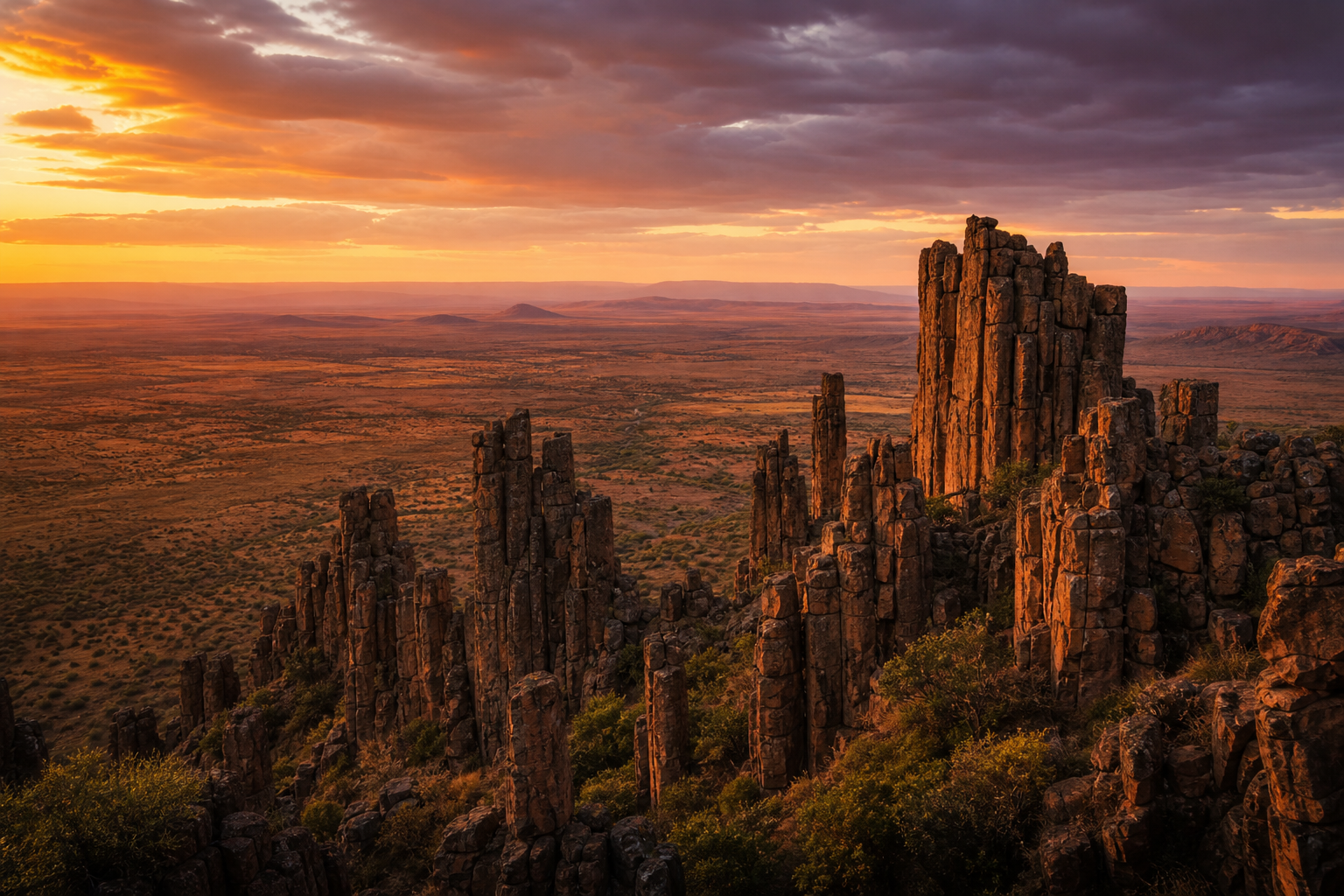
The real event happens in the afternoon. Head to Camdeboo National Park (R90 entry fee per person) and drive the scenic loop to the Valley of Desolation viewpoint. The road is gravel, but it’s well-maintained-your standard sedan can handle it fine, though a 4×4 makes the experience more fun. As you approach the viewpoint, you’ll understand why it has that name. The valley isn’t a lush depression-it’s a massive amphitheater of columns. Towering dolerite formations jut from the earth like the petrified fingers of giants, twisted and fractured by 180 million years of geological violence.
Stand at that viewpoint at sunset. The light turns the columns gold and crimson. The shadows deepen between them until they look bottomless. The sky swallows half the landscape. This is the Karoo at its most theatrical, and it’ll cost you nothing beyond the park entry.
Pro tip: The park has several hiking trails. The Wanderers’ Trail loops through the valley floor (12 km, moderate difficulty, ~3 hours). If you’ve got the legs for it, do it. Walking through those columns-hearing your boots crunch on the gravel, watching the valley expand around each turn-is something no viewpoint can capture.
Day 3: Off-Road Adventure & Camdeboo Conservation
This is where the sustainability angle matters. Camdeboo National Park exists not just for tourism, but as a working conservation area. The park protects critically endangered Karoo ecosystems and species like the Cape mountain zebra (brought back from near-extinction). When you pay your entry fee, you’re funding active conservation.
Explore the park’s lesser-known trails. The Springbok Trail (9 km, easy) winds through acacia scrubland where you’ll actually see wildlife-zebras, springbok, the occasional larger predator in the distance. The landscape here is different from the Valley: flatter, more open, with scrub brush and stunted trees adapted to minimal rainfall (around 200 mm per year). It’s stark. It’s beautiful. It’s what the Karoo actually looks like when you step away from the dramatic dolerite outcrops.
If you’re serious about the off-road experience, hire a guide through the park for a morning 4×4 drive into the deeper interior. You’ll see habitats most tourists miss, and the guide fees support local employment and park management.
Day 4: The Stretch Beyond
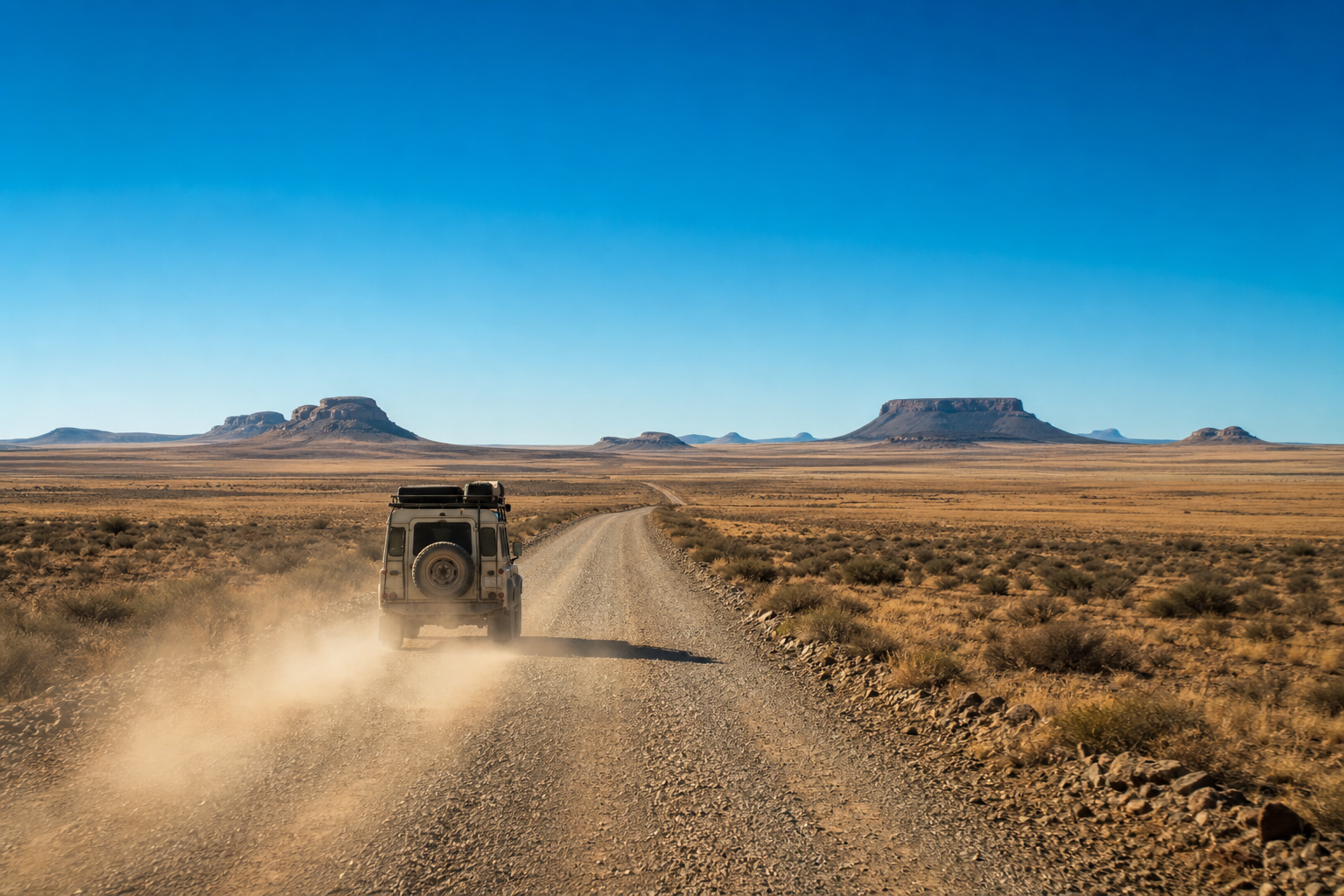
Don’t rush to leave. Take the R62 out toward Willowmore or double back toward Nieu-Bethesda (a tiny artist village worth a detour-fantastic craft shops, excellent restaurants run by creatives, weird energy in the best way). The roads here are pure Karoo: long, straight, hypnotic, with mountains in the distance and absolutely nothing in between.
If you’ve got an extra day, push further east on the N9 toward Oudtshoorn (another 200 km). The landscape transitions as you move, and the psychological shift is noticeable-the emptiness gradually gives way to more vegetation, more civilization. It’s worth the drive just to experience the transition.
Budget Breakdown (Per Person, 4 Days/3 Nights)
Fuel: R400–R600 (depends on your vehicle’s consumption; assume ~1.5 liters per 10 km on the N9, less on gravel)
Accommodation: R2,000–R2,400 (3 nights at mid-range guesthouses, split between two people)
Park fees: R270 (Camdeboo: R90/person × 3 days; can visit multiple times with daily pass)
Food: R800–R1,200 (budget guesthouses include breakfast; eat lunch from supplies; dinner at local restaurants or your guesthouse)
Miscellaneous: R200–R400 (coffee stops, snacks, emergency)
Total per person: R3,700–R4,900
This is a genuinely budget-friendly trip. You’re not camping rough-you’re sleeping in real beds with hot showers-but you’re also not checking into four-star lodges. It’s the sweet spot for anyone who wants authentic travel without breaking the bank.
Why This Road Trip Matters
The Karoo gets written off as “just desert” by people rushing between the coast and the interior. It’s treated like filler between destinations, not a destination itself. That’s the entire appeal. While every influencer is crowding Table Mountain and the Garden Route, you’ll be standing alone in the Valley of Desolation watching the sun bleed across stone formations older than human language.
The roads are safe, the landscape is untouched, and the pace is yours. No crowds. No queues. No Instagram tourists posing for the perfect shot. Just you, the Karoo, and the raw understanding that there’s still a lot of South Africa that hasn’t been packaged and sold.
And when you come back-and you will come back-you’ll finally understand why the Karoo changes people.
Pack water. More water than you think you need. Bring sun protection, a good hat, and a full tank of fuel before you leave any town. The Karoo doesn’t forgive complacency.


