By Zola Mkhize, Editor-in-Chief | Hidden Gems / Off the Beaten Track
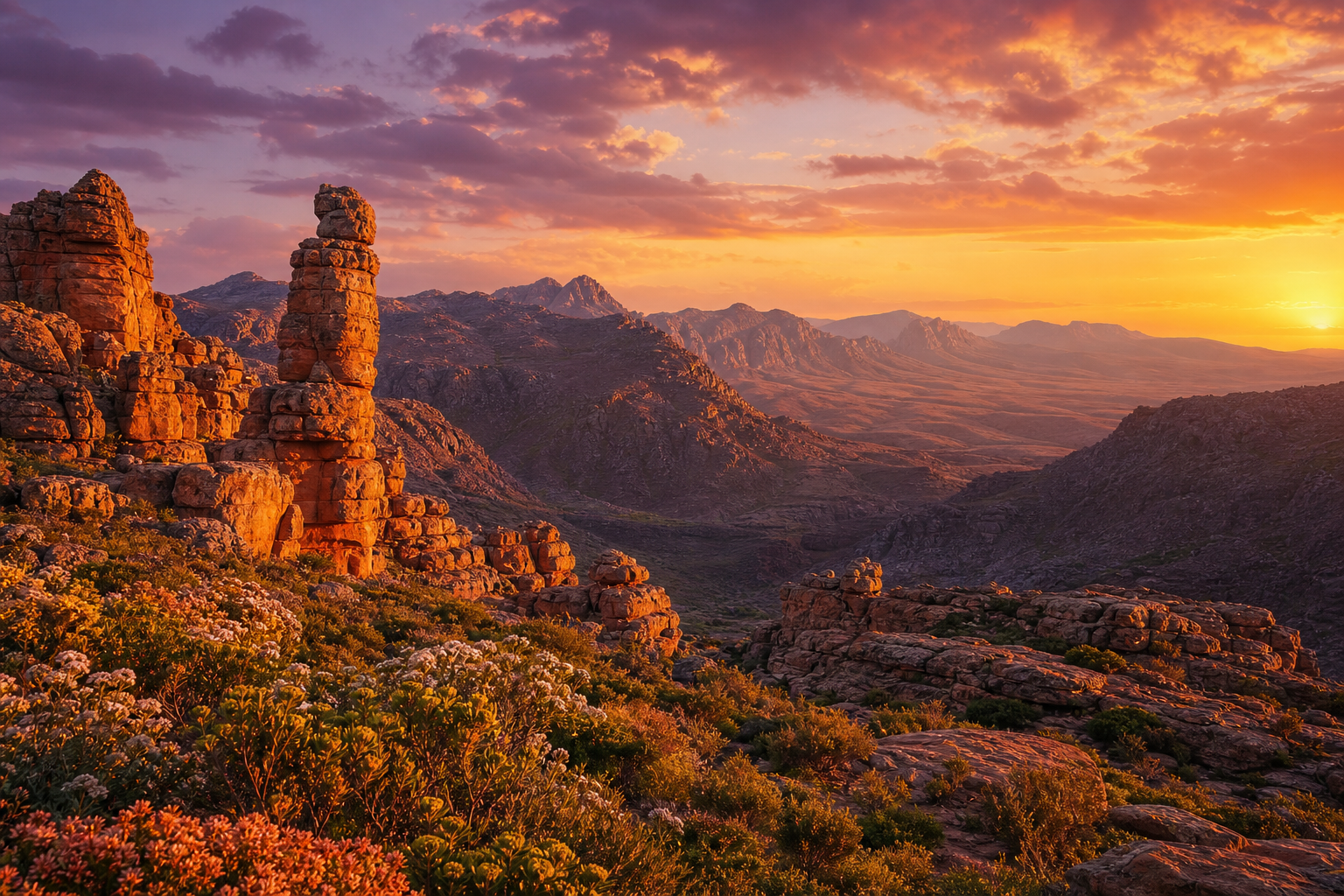
There is a particular kind of silence that belongs only to ancient places. Not the silence of emptiness – but the deep, breathing quiet of a landscape that has been here so long it has learned patience. The Cederberg Wilderness holds that silence in its red-orange rock formations, in its fynbos-carpeted valleys, in its caves where the San people pressed pigment to stone thousands of years before any map named this land.
It is, quite simply, one of the most extraordinary places in South Africa. And most of us have never been.
That is about to change.
The Ancient Heart of the Western Cape
Stretching across the mountains northeast of Cape Town, the Cederberg Wilderness Area covers approximately 71,000 hectares of rugged, breathtaking terrain managed by CapeNature. Named for the endangered Clanwilliam cedar tree – a species that once blanketed these slopes and now clings on in scattered groves – the Cederberg is a World Heritage candidate in everything but name.
What makes it extraordinary is not one thing, but the collision of many. Towering sandstone formations sculpted by millennia of wind and rain rise in shapes that seem designed by a dreaming hand – the iconic Wolfberg Arch, the Maltese Cross, the Sneeuberg peak. Beneath your feet, fynbos in a dizzying array of forms stretches to every horizon: buchu releasing its peppery scent when you brush past, proteas holding their heads high like royalty, and the ethereal Clanwilliam lily blooming in rivers after winter rains.
And then there is the rock art.
The Cederberg holds the Western Cape’s greatest concentration of San Bushman paintings, with thousands of images scattered across hundreds of sites. Red ochre eland and hunting figures, geometric patterns, and shamanic visions rendered in pigment that has endured across the ages. Standing before them, you feel the ground shift slightly beneath your certainty that history began when Europeans arrived. It did not. People loved, hunted, danced, and prayed in this landscape for more than ten thousand years. The rocks remember everything.
Getting There: Closer Than You Think
From Cape Town, the Cederberg is a deceptively easy escape – roughly 200 kilometres north along the N7, past Malmesbury’s farmlands and through the dramatic Piekenierskloof Pass. The drive takes about two and a half to three hours, and the gradual transformation of scenery is part of the journey. You leave behind the vineyards and suburbs, and the world opens into something older, wilder, more honest.
The closest towns are Clanwilliam (to the northwest) and Citrusdal (to the southwest) – both worth a stop. Stock up on supplies in either town before heading into the reserve; there are no shops once you cross the Olifants River and head up into the mountains. The last stretch of road into Algeria (the main access point and campsite hub) is gravel, so take your time and enjoy the dust rising around your tyres. It is the beginning of the wilderness greeting you.
A note: the bridge over the Olifants River can flood during winter rains between May and August. If you’re planning a winter visit – which, despite the rain, is spectacular for waterfalls and snow on the Sneeuberg – call the Algeria office ahead of departure to confirm road conditions.
Where to Stay: Budget Travel in the Wilderness
Here is the good news for ordinary South African travellers: the Cederberg is remarkably affordable. CapeNature manages the area and offers options across the full budget spectrum.
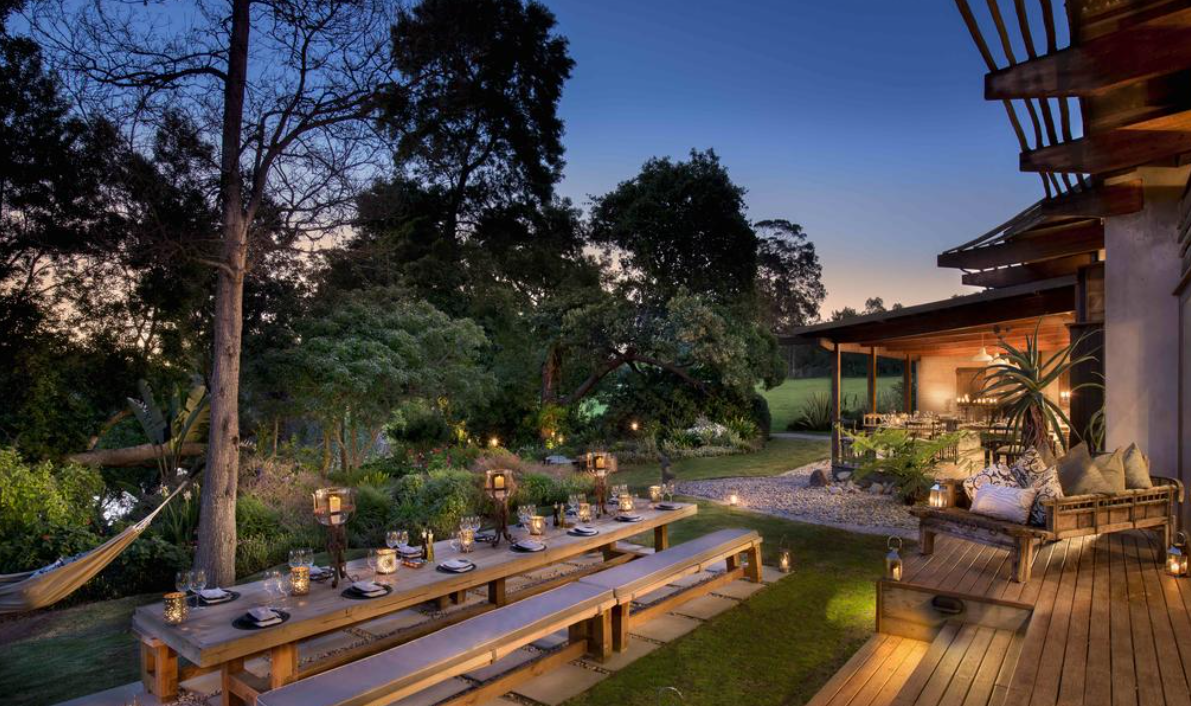
Camping at Algeria Campsite is the most popular entry point – spacious, beautifully maintained, with ablution facilities and braai areas set beneath towering trees along the Rondegat River. Rates are modest by any standard, and the experience of waking to birdsong and the sound of running water with mountains rising on every side is worth every cent. A second campsite at Kliphuis offers a more remote, quieter alternative.
Self-catering stone cottages managed by CapeNature sleep between two and eight people and are scattered across the reserve. These rustic but well-equipped spaces are ideal for families or small groups looking for something slightly more sheltered than a tent. Booking in advance – especially over peak periods like school holidays and the rooibos harvest season – is strongly advised.
For those with a larger budget, Bushmans Kloof Wilderness Reserve & Retreat sits on the edge of Cederberg country and offers a world-class luxury experience with guided rock art tours included. It is a different world, but no less special.
What to Do: A Mountain Wilderness Full of Possibility
The Cederberg rewards explorers at every level.
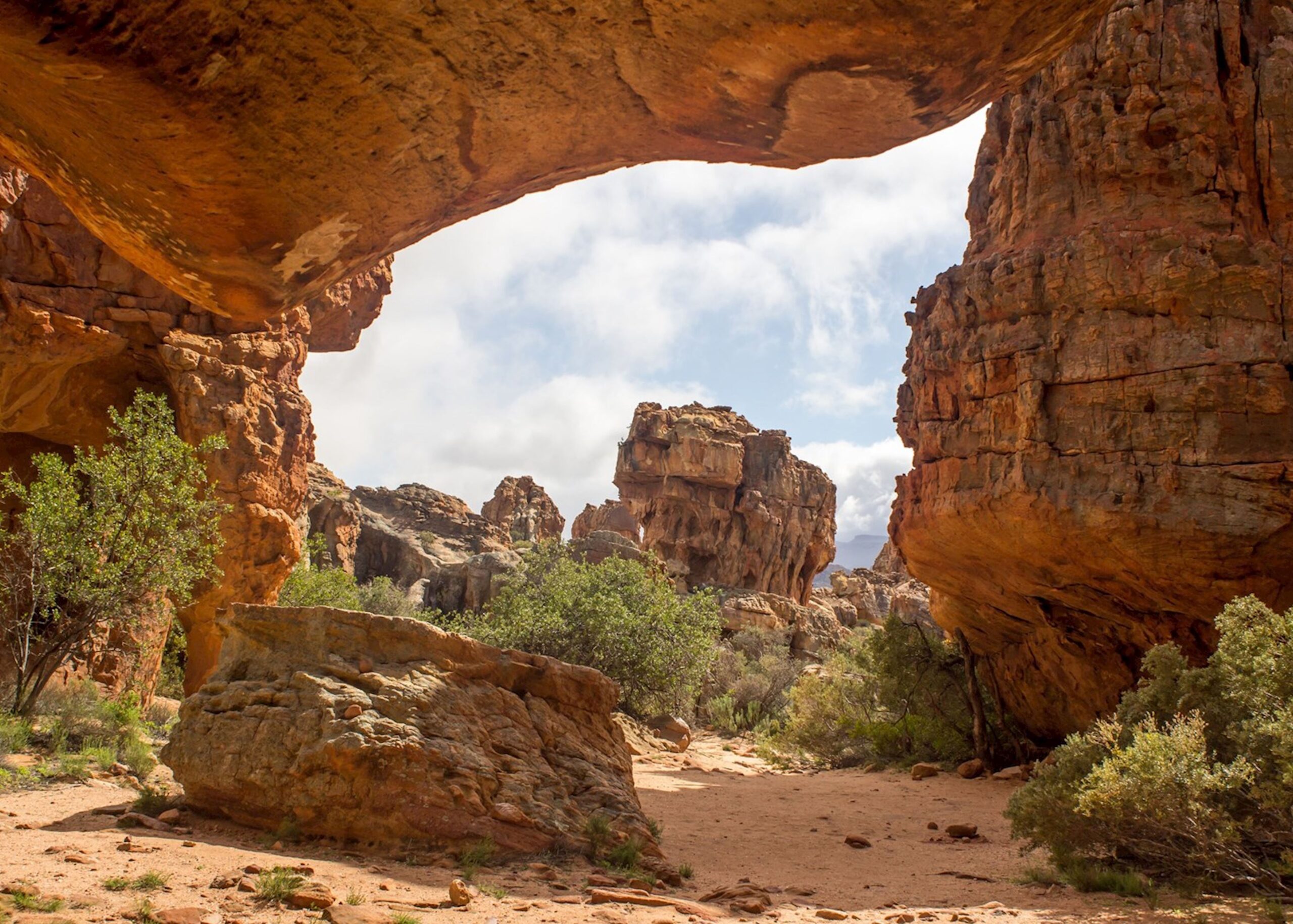
Hiking is the heartbeat of the experience. More than 254 kilometres of trails wind through the wilderness, ranging from gentle half-day walks to serious multi-day traverses. The Wolfberg Arch Trail (approximately 14 km return from Algeria) leads to one of South Africa’s most remarkable natural arches – a sandstone portal large enough to walk through, framing a view of endless mountains beyond. Do it at sunrise if you possibly can.
The Maltese Cross trail is shorter and more accessible, winding through otherworldly rock formations to a 20-metre cross-shaped pillar of Cederberg sandstone that seems to have been placed there deliberately, by hands that understood drama. It is strange and beautiful and unforgettable.
For those wanting to push further, the Sneeuberg trail reaches the reserve’s highest peak at 2,026 metres. After winter snowfall, the summit views are staggering.
Rock art sites are scattered throughout – some accessible on easy walks, others requiring a guided trip or longer trail. The Stadsaal Caves are among the most accessible and most significant: a cathedral-like rock overhang covered in San paintings, reachable on a short walk from a parking area. No guide needed, no expensive fee. Just you, the ancient images, and the sound of the wind.
Rock climbing has a devoted following in the Cederberg – the sandstone formations offer routes for all levels, and the community of climbers who gather here annually at the Rocklands area (near Pakhuis Pass) is warm and welcoming.
Stargazing is another extraordinary gift. The Cederberg is far enough from light pollution that on clear nights, the Milky Way is not a concept but a reality – a river of light above your tent that makes small talk feel irrelevant.
San Rock Art: Slow Down and Look Properly
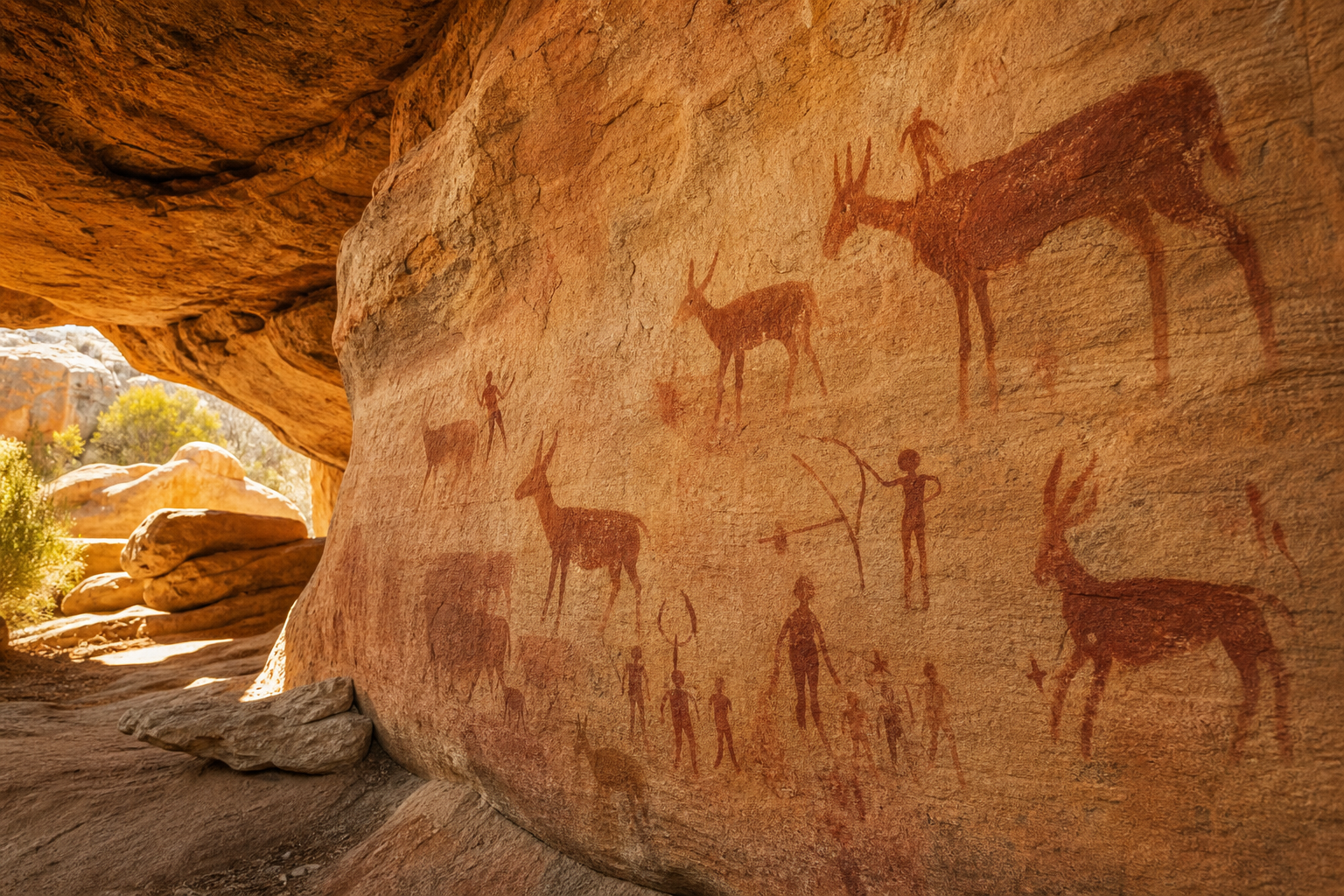
South Africa’s San rock art is among the most significant cultural heritage on the continent, and the Cederberg holds some of its finest examples. The paintings – made primarily from ochre, white clay, charcoal, and animal fat – depict eland, elephants, human figures in states of trance, and geometric patterns that researchers believe represent the altered states of consciousness experienced during healing dances.
The San were the first people of southern Africa, and their relationship to this land was not ownership but belonging. Standing at a painted site, with the afternoon light shifting across ancient pigment, you understand something profound: that South Africa’s heritage did not begin with colonialism’s records. It begins here, in these mountains, in these images.
Treat the sites with the care they deserve. Touch nothing. Photograph freely. Bring silence instead of commentary.
Best Time to Visit
The Cederberg is a year-round destination, but each season offers a different experience.
Spring (August to October) is the showstopper. The fynbos erupts in colour, wildflowers carpet every slope, and the rivers run clear and cold. This is when the wilderness is at its most alive.
Summer (November to February) brings heat – sometimes extreme, with temperatures reaching 40°C. Early morning hiking is essential; afternoons are for shade, rivers, and stillness. The heat has its own beauty – everything shimmer and haze and the smell of baked earth.
Autumn (March to May) is quieter and cooler, perfect for longer hikes. The rooibos harvest in the surrounding Clanwilliam district brings a particular warm-earth fragrance to the air.
Winter (June to July) brings rain, cold nights, and occasional snow on the highest peaks. The Wolfberg and Sneeuberg in snow are images you will not soon forget – and the Algeria campsite, with a fire going and the mountains white above you, feels like the edge of the world.
Practical Information and Budget Tips
- Permits: Day visitors and overnight hikers require permits from CapeNature. Book via the CapeNature website or call the Algeria office directly. Permit fees are reasonable and contribute directly to conservation.
- Camping fees: Budget approximately R200–R350 per person per night at Algeria or Kliphuis. Cottages range from R500–R1,500 per night depending on size and season.
- What to bring: Water (carry at least 2–3 litres per person for day hikes), sunscreen, a hat, sturdy shoes, a light jacket year-round (mountain temperatures drop fast), and a sense of wonder.
- Snakes: Puff adders and cape cobras are present. Watch your step on rocky trails, especially in summer. A snake is rarely the aggressor – just be aware and give them space.
- No signal: Cell coverage is limited to non-existent in most of the reserve. This is not a problem. It is the point.
The Thing About the Cederberg
There is a moment, somewhere on a rocky ridge with fynbos at your knees and the entire Western Cape laid out below you in every shade of brown and gold and green, when the everyday noise falls away completely. When you understand that travel is not about how far you go or how much it costs – it is about arriving somewhere that changes how you see.
The Cederberg will change how you see.
It is two and a half hours from Cape Town. It is within reach of anyone with a car, a tent, and the willingness to go. It is South Africa at its most ancient and most generous – a landscape that asks nothing of you except your attention.
Pay it.
Getting there: Take the N7 from Cape Town toward Clanwilliam. Turn onto the R303 at Citrusdal or Clanwilliam toward Algeria. The route is well-signposted. Allow 2.5–3 hours from Cape Town.
Booking: Visit www.capenature.co.za for permits and accommodation reservations.
More information: CapeNature Algeria Field Office: +27 (0)27 482 2403