Author: Thato “Action” Molefe, Outdoor & Action Editor
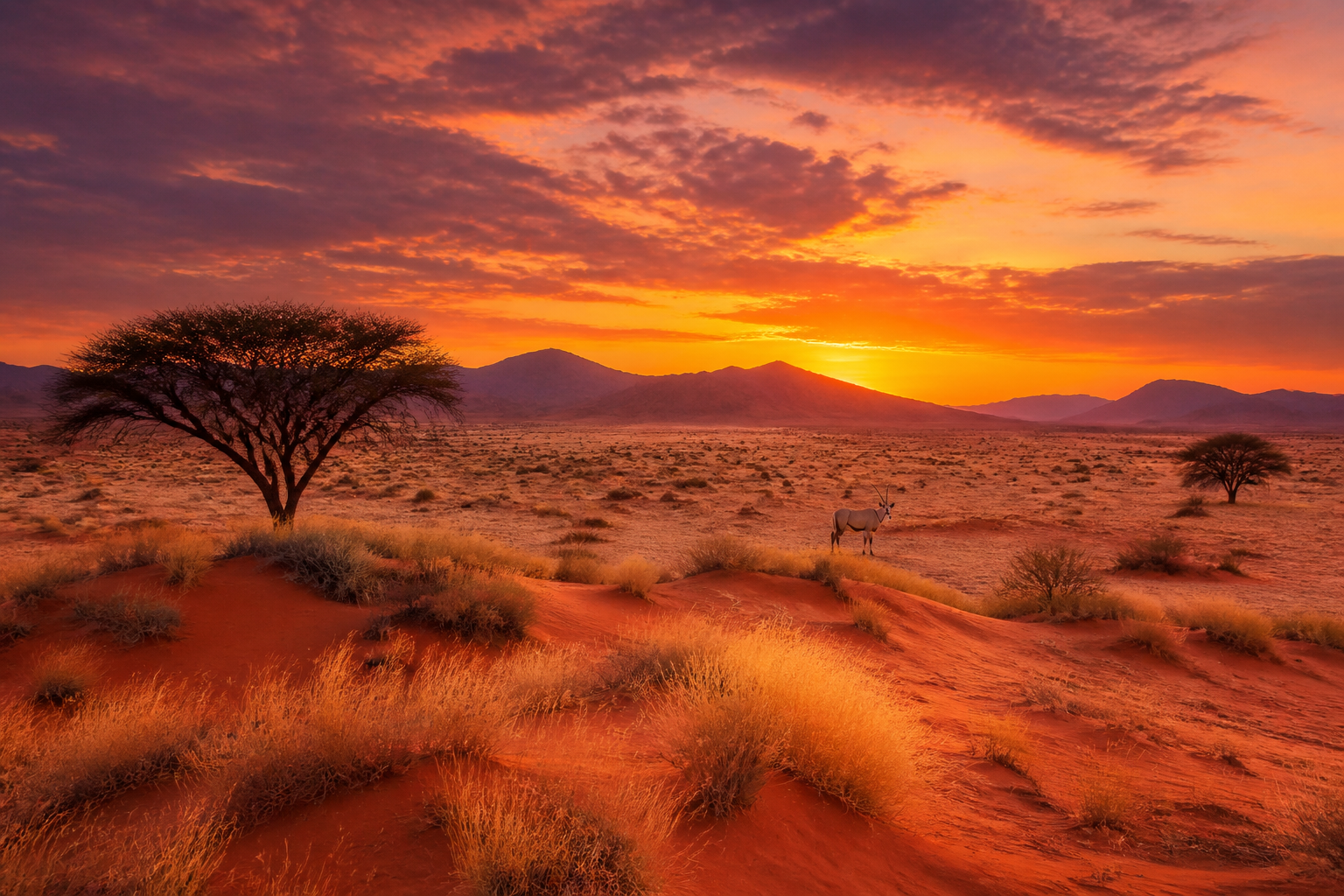
There’s a particular kind of silence you only find in the Kalahari. Not the silence of emptiness – the silence of deep, deep life. Of something ancient holding its breath. The red sand beneath your boots is warm even before the sun fully clears the horizon. The air smells of dry earth, wild sage, and possibility. And somewhere out there – moving through the dark before dawn in a slow, armoured shuffle – is one of the most extraordinary creatures this continent has ever produced.
The pangolin doesn’t ask for your attention. It doesn’t need it. It has survived on this earth for 80 million years without your Instagram story. But right now, in the 21st century, this ancient, magnificent, utterly weird little mammal is fighting for its life. And in the Northern Cape, at one of South Africa’s most remarkable private game reserves, a small army of scientists, trackers, and guides are fighting right alongside it.
Welcome to Tswalu Kalahari. Pull up a chair – this one’s going to stay with you.
1,200 Square Kilometres of Second Chances
Tswalu doesn’t look like a typical South African safari destination. There are no big five checklist boards at the gate. No convoy of game vehicles following a pride of lions. What you get instead is something rarer and more satisfying: a wild landscape being actively rewilded – handed back, piece by careful piece, to the species and ecosystems that belonged here long before farming arrived.
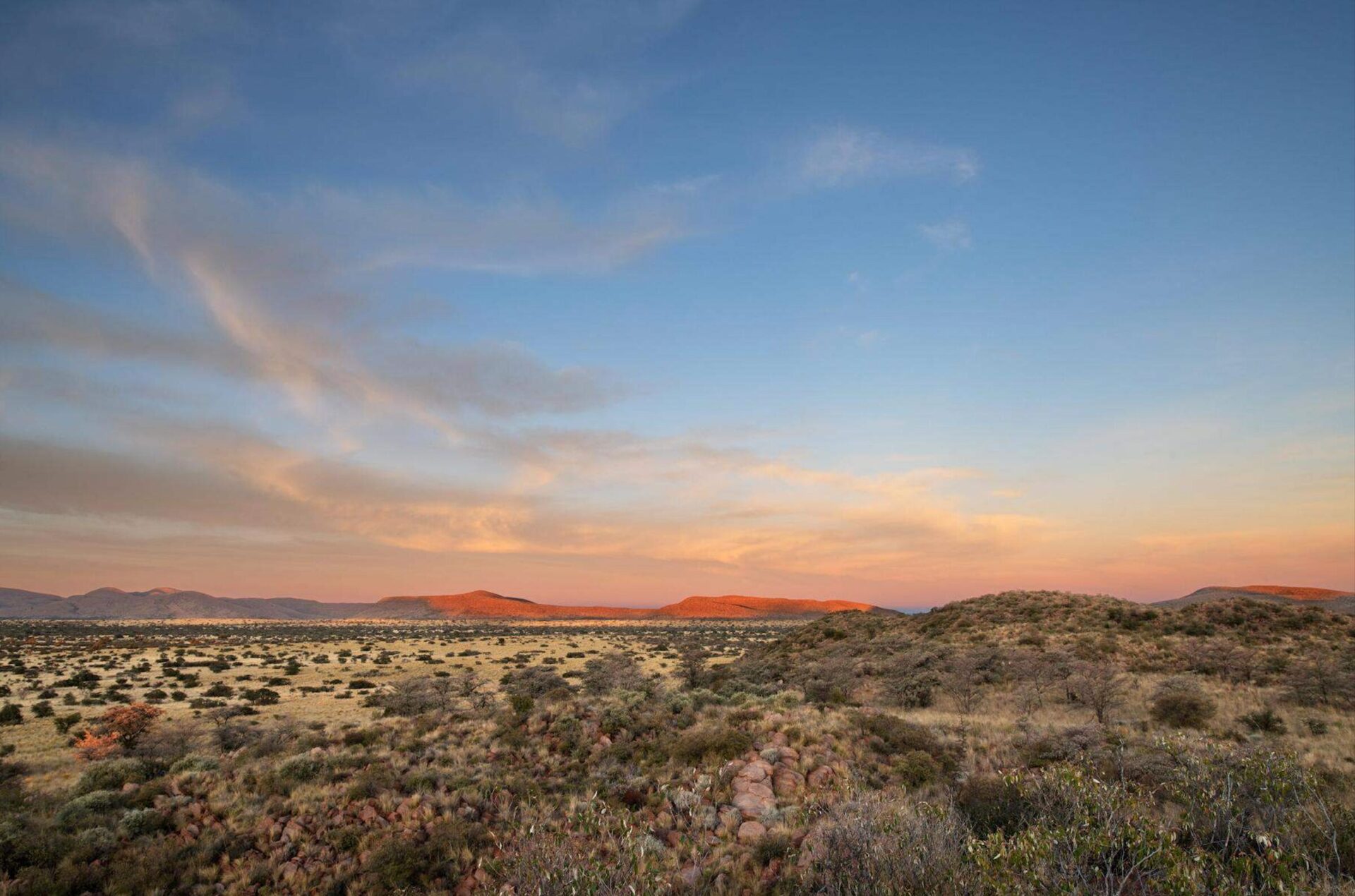
The reserve covers 1,200 square kilometres of the southern Kalahari – a red-dune, semi-arid wilderness that stretches from South Africa up through Botswana and Namibia. It was once farmland. Now it’s something closer to what this landscape always was before humans decided otherwise. Tswalu’s founding vision was radical in its simplicity: take this broken piece of Africa and give it back to itself.
That philosophy shapes everything here. The accommodation is exceptional – we’ll get to that – but it’s not the point. The point is the land. And the creatures that live in it.
The Most Trafficked Mammal You’ve Never Heard Of
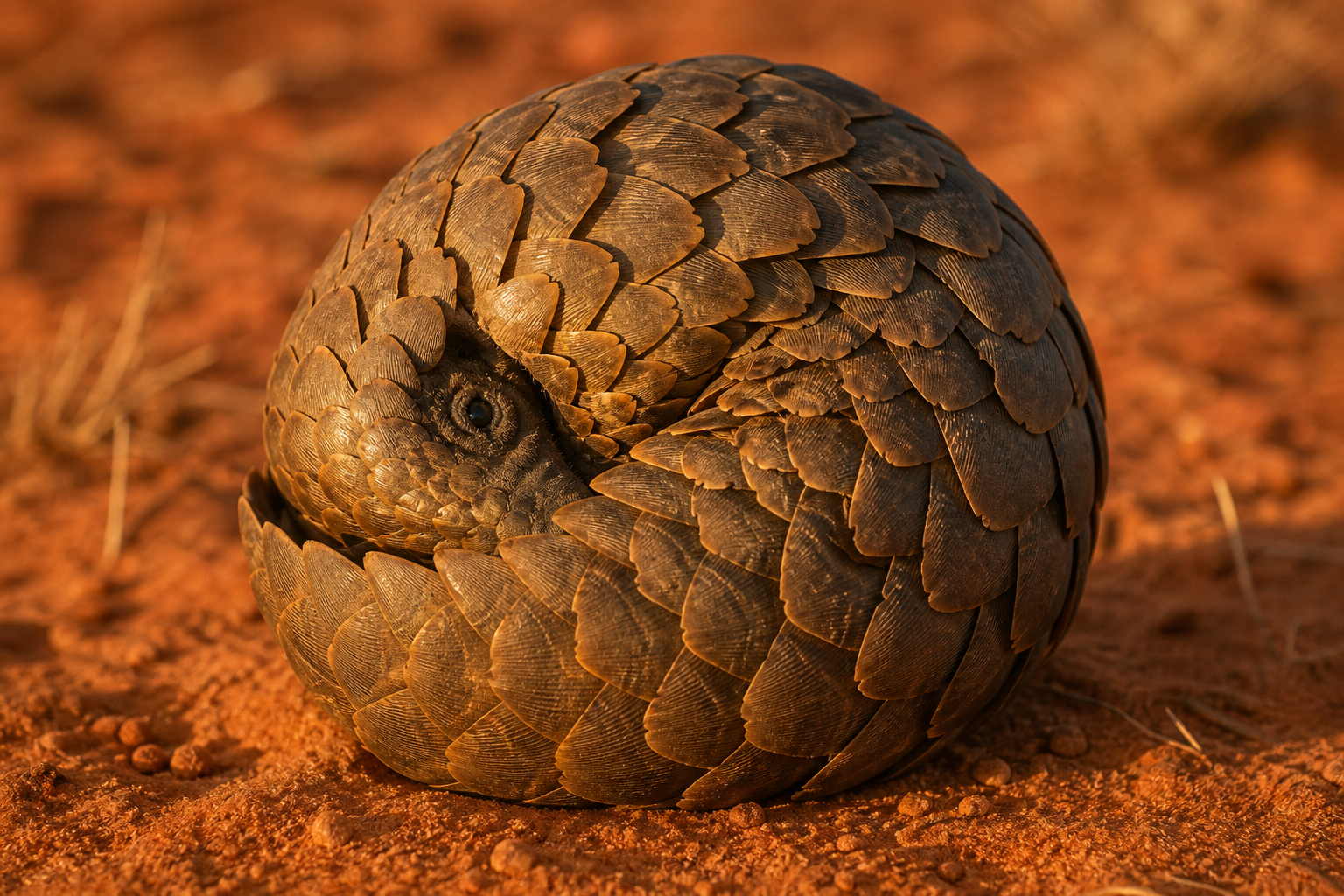
Let me put a number in front of you: pangolins are the most illegally trafficked mammal on the planet. More than rhinos. More than elephants. Every single year, hundreds of thousands of pangolins are seized in illegal trade across Africa and Asia, killed for their scales – which are made of keratin, exactly the same material as your fingernails – because some people believe those scales have medicinal properties. They don’t. But belief, in the world of wildlife trafficking, is a death sentence.
The Temminck’s pangolin, the species found in southern Africa, is a creature of extraordinary beauty and strangeness. It walks on its hind legs, using its heavy tail for balance. It curls into an almost perfect ball when threatened – a defence that works perfectly against every predator except one. When threatened by a human with a poaching bag, that famous armour becomes a fatal vulnerability. You pick it up. You put it in a bag. You sell it. The pangolin never uncurls.
At Tswalu, they’ve decided that’s not acceptable. What started as a single PhD research project more than a decade ago has grown into one of the most comprehensive pangolin research programmes on the continent. Five separate active research streams are currently running at Tswalu, each unpacking a different piece of the pangolin’s ecology: their movement patterns, their role in soil aeration and nutrient cycling, their competition for food with aardvarks, their physiological responses to drought and lean seasons.
And now – crucially – Tswalu has been officially designated as a release site for rehabilitated pangolins rescued from the illegal trade.
Where the Rescued Come Home
Think about what that means for a moment. An animal snatched from the wild, transported across borders in terrifying conditions, held in captivity – and then, if it’s lucky enough to be intercepted by rangers or border officials, handed to a rehabilitation team who will spend months carefully rebuilding its health, its behaviour, its ability to fend for itself.
And then it comes to the Kalahari.
The Tswalu team fits each released pangolin with a tracking device and follows them with a combination of ground-based researchers and remote telemetry. Night drives, early mornings, long patient hours in the red sand waiting for a signal. The question they’re trying to answer is one of the most profound in conservation biology: can a traumatised animal truly return to the wild? Can something that has been through that much come back?
It’s too early for definitive answers – some of these releases are still recent. But the data is accumulating. The pangolins are moving. They’re foraging. Some are surviving seasons that would test any wild animal. The work continues.
As a visitor at Tswalu, you get to step inside this story. Your safari activities are woven through with genuine conservation insight: guides who understand the research at a level far beyond surface “fun facts,” night drives where you might – if the stars align and the trackers have done their work – actually encounter a pangolin in the wild. Not a guaranteed sighting. Not a canned experience. A real wild animal, living its ancient life in the darkness of the Kalahari.
Eco-Tourism That Actually Does Something
Here’s the thing I always come back to with places like Tswalu: the best argument for conservation-based tourism isn’t moral. It’s practical. Conservation is expensive. Research costs money. Ranger salaries cost money. Anti-poaching operations cost money. The animals themselves don’t generate revenue.
The guests do.
When you stay at Tswalu, you are directly funding the pangolin research programme, the rewilding efforts, and the long-term vision for this piece of the Kalahari. Every night’s accommodation is, in the most direct possible sense, a conservation contribution. That’s not marketing copy – that’s the actual financial model.
This matters for South African travellers looking for meaningful eco-tourism experiences. Yes, Tswalu sits at the premium end of the safari market – it is an internationally recognized luxury reserve, and the pricing reflects that. But the principle scales. What Tswalu demonstrates, in spectacular fashion, is that wild spaces need economic value to survive in the modern world. Whether that’s through tourism, conservation easements, or community benefit structures – the lesson is the same. If the land doesn’t pay, the land gets farmed. If the animals don’t matter economically, the animals lose.
Getting There and What to Expect
Tswalu is accessible by charter flight from Johannesburg or Cape Town into the Tswalu airstrip – the reserve operates its own transfers from there. The Northern Cape location means you’re genuinely remote, in the best possible way. The landscape is not the lush green of Kruger or the dramatic coastlines of the Garden Route. It is sparse, ancient, and extraordinary in a completely different register.
Accommodation at Tswalu splits into two main options: The Motse, the main lodge with individual thatched cottages, and Tarkuni, an exclusive-use homestead for groups or families wanting the entire experience to themselves. Both sit lightly on the landscape, architecturally designed to echo the Kalahari’s colours and textures rather than impose on them.
Game drives run morning and evening, with night drives a regular feature – essential for any chance of pangolin sightings, as well as aardvark, brown hyena, and the extraordinary suite of nocturnal Kalahari wildlife. Walking safaris, guided by trackers who can read this landscape like a second language, add another dimension entirely.
Why This Story Matters Right Now
The pangolin doesn’t know what’s happening to its species. It doesn’t know about trafficking networks or international demand or the conservation researchers tagging it in the dark. It just knows the smell of termite mounds and the warmth of Kalahari sand.
What we know – and what Tswalu keeps demonstrating, year after painstaking year – is that recovery is possible. That a piece of land beaten down by agriculture can return to wildness. That a creature pulled from the illegal trade can, maybe, find its way back to living a pangolin’s life.
That’s the story worth telling. That’s why you go to the Kalahari.
Practical Info:
– Getting there: Charter flights from Johannesburg (approx. 2 hrs) or Cape Town (approx. 2.5 hrs) to Tswalu airstrip
– Best time to visit: Year-round; winter (May–August) offers cooler temperatures and excellent game visibility; summer brings dramatic thunderstorms and newborn animals
– Book through: Tswalu Kalahari directly or through a specialist operator
– Conservation contribution: Built into every stay – Tswalu’s Motse foundation funds all research programmes
– For more on SA eco-tourism destinations: Keep it locked to Everything ZA Travel