Section: Hidden Gems / Off the Beaten Track Author: Zola Mkhize, Editor-in-Chief
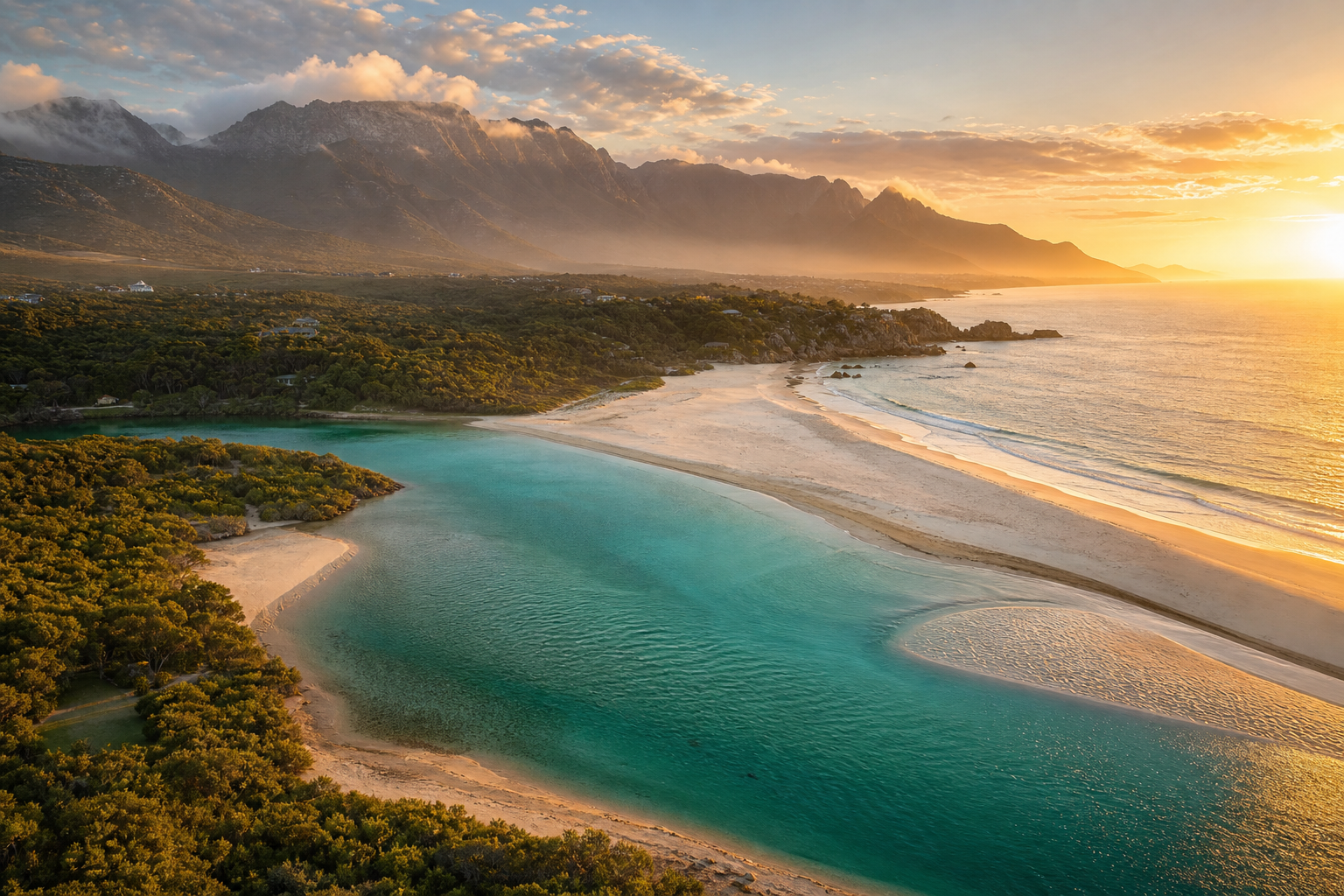
There is a particular kind of quiet that settles over Plettenberg Bay in July. The summer crowds are gone, the holiday cottages stand still behind bougainvillea-draped walls, and the Indian Ocean – vast and cold and brilliantly blue – belongs, for a few precious months, almost entirely to the whales.
This is the Plett that ordinary South Africans rarely talk about. We’ve been conditioned to think of it as a summer destination, a December playground for the wealthy, a place of beach umbrellas and traffic jams on the N2. And that version of Plett is real. But it’s not the whole story. The full story – the better story – belongs to winter, and it belongs to anyone brave enough to swap the flip-flops for a fleece and point the car east along the Garden Route.
The Town Beneath the Postcard
Plettenberg Bay sits cradled in a natural amphitheatre on the Southern Cape coast, roughly 240 kilometres from Cape Town and 180 kilometres from Port Elizabeth (now Gqeberha). The Keurbooms River slides quietly to the sea on one side; the Bitou River meets it not far beyond. Together they form a lagoon that catches the light in ways that make amateur photographers weep with gratitude.
The town itself is modest and human-scaled in winter. The esplanade restaurants are still open but unhurried. The local fishermen still push their small boats out before sunrise, returning with snoek and yellowtail that will be smoked and sold from the back of bakkies along the roadside. A portion of smoked snoek from a roadside vendor, wrapped in brown paper, eaten in the car with a cup of coffee from the nearest Wimpy – that, right there, is South African travel in its most honest, most joyful form.
The Whales of July
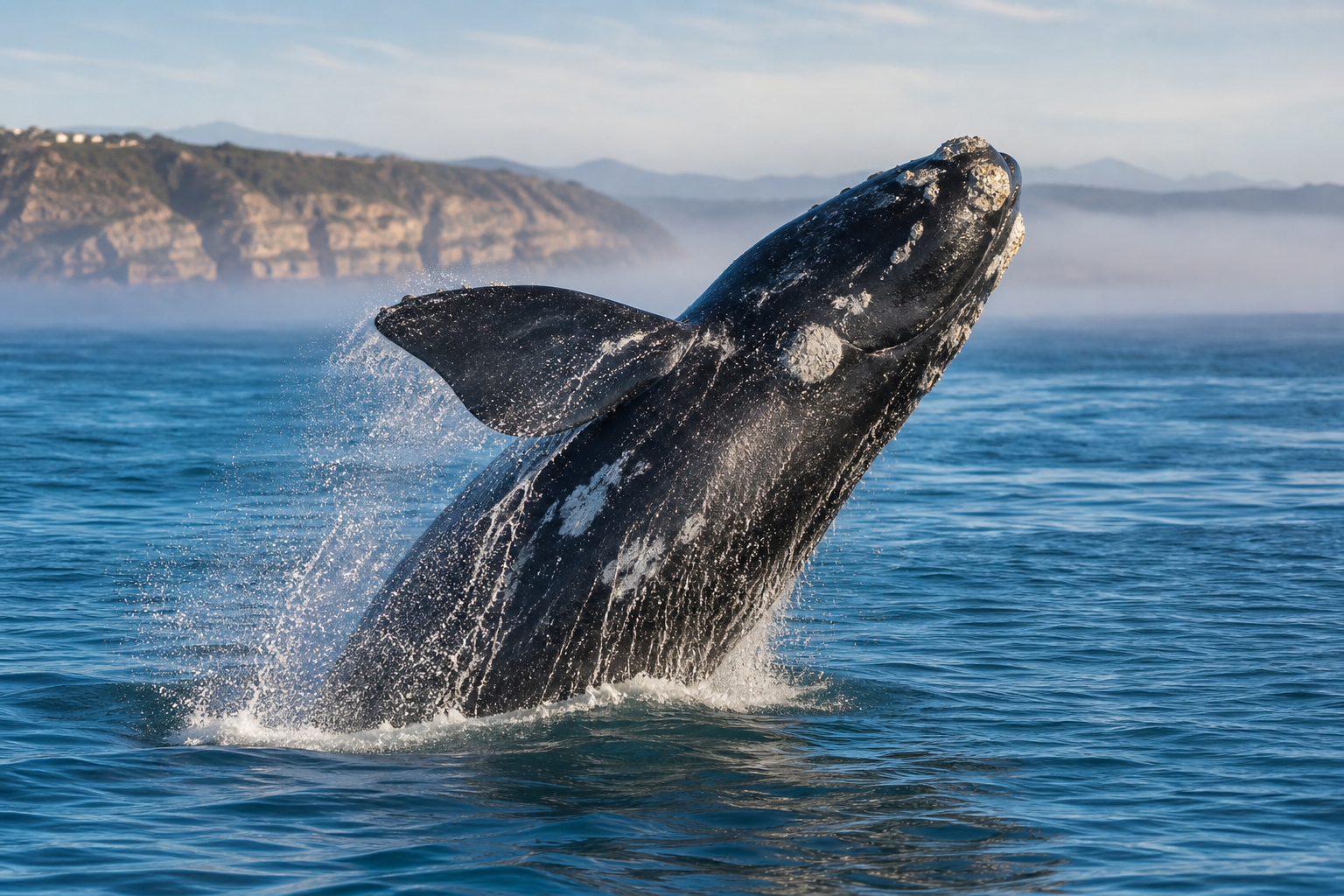
From June through November, Southern Right Whales migrate to the warm inshore waters of the Cape and Garden Route to calve and nurse their young. Plettenberg Bay is one of the finest front-row seats in the country for this spectacle, and July sits right in the thick of it.
You do not need a boat, a guide, or a booking. Walk to the Kranshoek viewpoint above the rocks, find a boulder to sit on, and wait. The patience required is roughly equivalent to waiting for a bus – but the reward is immeasurably greater. A Southern Right Whale breaching 50 metres from shore is not something you will ever unsee. The sound of one surfacing – that slow, enormous exhale – is something that stays in the chest long after the road home has unwound behind you.
If you do want to get closer, Ocean Blue Adventures and Offshore Adventures both offer responsible whale and dolphin boat trips at rates that, while not free, are far gentler on the pocket than comparable experiences in other countries. Budget approximately R900–R1,200 per person for a two-hour trip – a lot of money by South African standards, yes, but this is once-in-a-lifetime territory.
Walking the Robberg – For Free
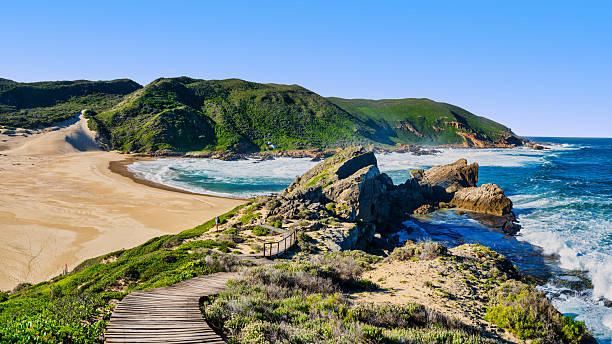
The Robberg Nature Reserve, a dramatic 4-kilometre peninsula of ancient rock that juts into the sea just outside town, is the kind of place that makes you feel small in the best possible way. Formed over 130 million years ago, Robberg carries a weight of time that you feel in your feet as you walk its circular trails.
Entry costs R205 for adults (South African citizens pay a reduced rate). The trails range from a gentle 2-kilometre stroll to a 9-kilometre full circuit that takes you right out to the tip of the peninsula, past the Point, and back again. You will see seals – hundreds of them, lazing on the rocks below in a state of magnificent indifference. You may see dolphins threading the kelp beds. If you are very lucky, you may see a Great White Shark patrolling the shallower water near the seal colony.
Take your lunch. Sit on the rocks. Let the wind do what it wants to your hair. There is no entry fee to the view, and the view is extraordinary.
Where to Sleep Without Selling a Kidney
The off-season makes Plettenberg Bay genuinely accessible. Self-catering rates drop significantly between May and August, and the options are wide.
For backpacker and budget travellers, Albergo for Backpackers on Church Street remains one of the Garden Route’s most beloved hostels – warm, welcoming, with a fireplace that earns its keep in July. Dorm beds run from around R300 per night; private rooms from R600–R800.
For those travelling as a family or small group, a self-catering cottage in the Keurbooms area offers far better value than any hotel. Platforms like Lekkeslaap and Nightsbridge list dozens of properties within 10 kilometres of town, many with fireplaces and sea views, at winter rates that would surprise you. A two-bedroom cottage sleeping four can often be found for R800–R1,200 per night in low season – split four ways, that’s the price of a fast-food meal per person.
The hidden trick: book Thursday to Monday and avoid the weekend premium that even winter brings. Arrive mid-week and the whole town feels like it was set out just for you.
Eating Well on a Budget
The Garden Route, and Plett in particular, is a place where good food and low prices are not mutually exclusive.
The Lookout Deck remains the town’s most famous restaurant and the views justify the prices. But go for sundowners and a bowl of calamari, not the full dinner spread, and you will leave both satisfied and solvent.
For everyday eating, the Main Street strip is full of unpretentious options. The Plett Bagel does exactly what the name suggests, and does it excellently. The Fish Shack near the Beacon Isle end of town is honest, generous, and does a hake-and-chips that requires no explanation.
The Saturday morning market at the Beachwalk Shopping Centre is worth building your whole Saturday around. Local bakers, honey vendors, fresh produce sellers, a mushroom farm, a woman who makes koeksisters that are somehow lighter than physics should allow. Budget R100–R150 for a full market haul, and you will have breakfast sorted and half your picnic provisions covered.
Getting There
Plettenberg Bay is a 4.5-hour drive from Cape Town along the N2 – one of the most beautiful stretches of road in South Africa. The Baz Bus services the route on its Garden Route circuit, making Plett accessible without a car for travellers coming from Cape Town or Port Elizabeth. Check current schedules and rates at bazbus.com.
If you’re flying, the nearest airports are George (1.5 hours west) and Gqeberha (2 hours east). Budget airline options on both routes make flying-and-hiring-a-car viable for long-weekend trips.
July petrol prices are what they are – check the monthly fuel price announcement and budget accordingly. A full tank from Cape Town should see you to Plett and back with fuel to spare.
The Real Cost of Not Going
South Africans have a complicated relationship with the idea of “treating ourselves.” There is guilt in spending money on travel when the month is tight, when the school fees are looming, when something always seems to need fixing at home.
But I want to push back on that guilt, gently and with love.
Plettenberg Bay in July – packed with whale song and fynbos air and the sound of the Keurbooms sliding to the sea – is not a luxury. It is your country. It belongs to you. It will cost you less than a weekend of take-aways and streaming services, and it will give you back something that none of those things can: the particular, irreplaceable feeling of standing at the edge of the continent and understanding, in your bones, that you live somewhere extraordinary.
Pack the fleece. Brew the flask. Point the car east.
The whales are already there, waiting.