


Image Source: Tracks4Africa
Section: Hidden Gems / Off the Beaten Track
Author: Zola Mkhize, Editor-in-Chief – Everything ZA Travel
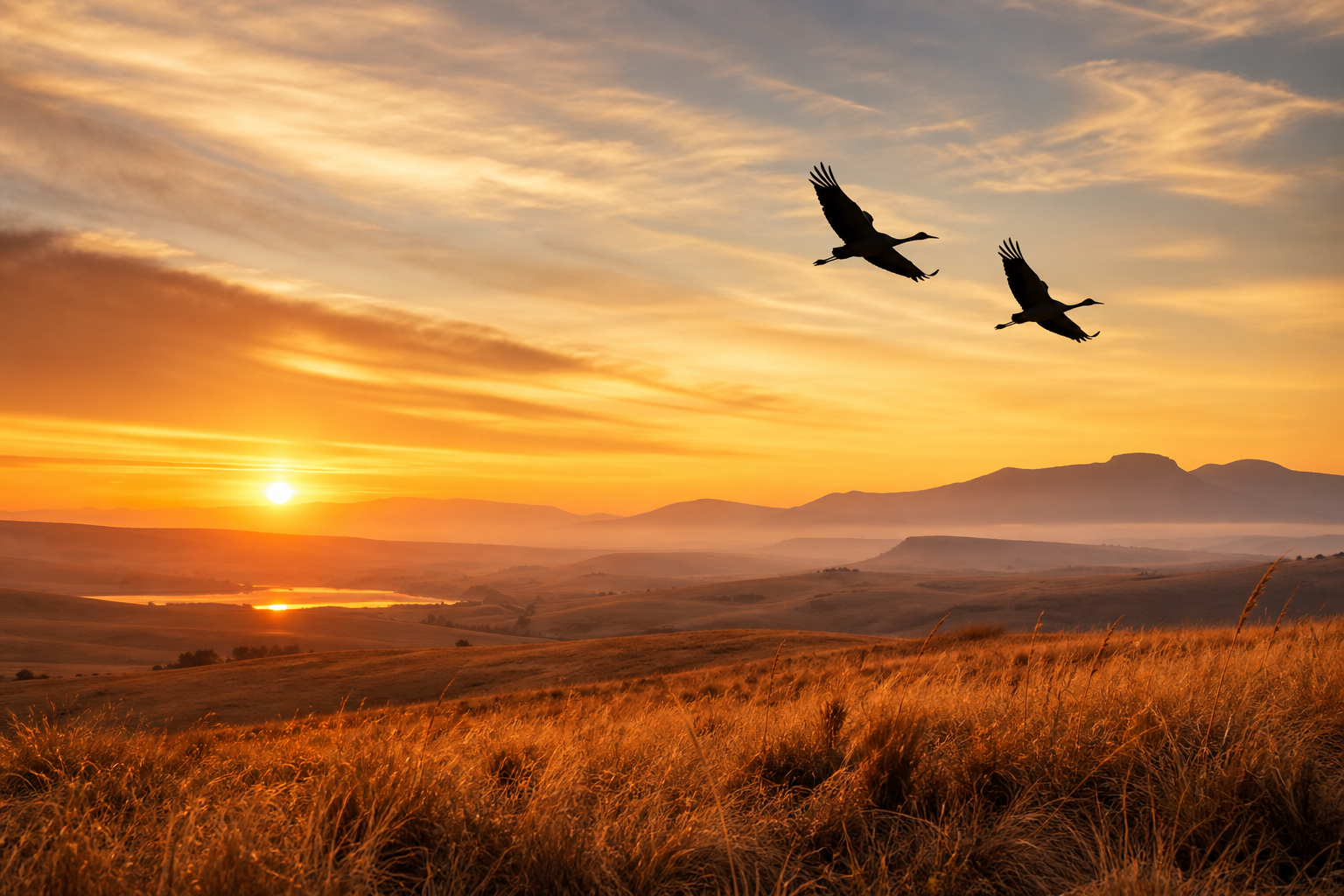
Wakkerstroom’s highveld grasslands at golden hour – the cranes come home at dusk
There is a village in the southeastern corner of Mpumalanga where the wind comes down off the Drakensberg escarpment cold and clean, where the grasslands roll away in every direction like a rumpled blanket thrown across the highveld, and where the silence is so complete on a winter morning that you can hear a crane calling from across the wetland before you have even opened your eyes. Its name is Wakkerstroom. Almost nobody goes there. That is the first thing you need to know.
Why Wakkerstroom Exists – and Why It Matters
Wakkerstroom was established in 1859 as a small Victorian market town serving the surrounding farming community. It sits at 1,750 metres above sea level – high enough that the air has a quality you notice immediately after the flatlands of Gauteng or the humidity of the KZN coast. The streets are wide. The buildings are old, sandstone and corrugated iron, the kind of architecture that says we built to last, not to impress.
For most of its history, Wakkerstroom was simply a place where farmers came to sell things and buy things and go home again. Then the birders arrived.
The wetlands and grasslands surrounding the town turned out to be one of the most important habitats for grassland birds in the whole of southern Africa. The Wakkerstroom Wetland Reserve – a protected area managed with the surrounding community – holds species that have disappeared from most of South Africa’s degraded grasslands. The Wattled Crane, the Blue Korhaan, the Botha’s Lark (found almost nowhere else on earth), the Rudd’s Lark – these are not incidental sightings. They are residents. Wakkerstroom is where they live.
BirdLife South Africa has had a presence here for decades. The town is one of the most important birding sites on the continent. Most South Africans have never heard of it.
What to Do in Wakkerstroom
1. Walk the Wetland Reserve
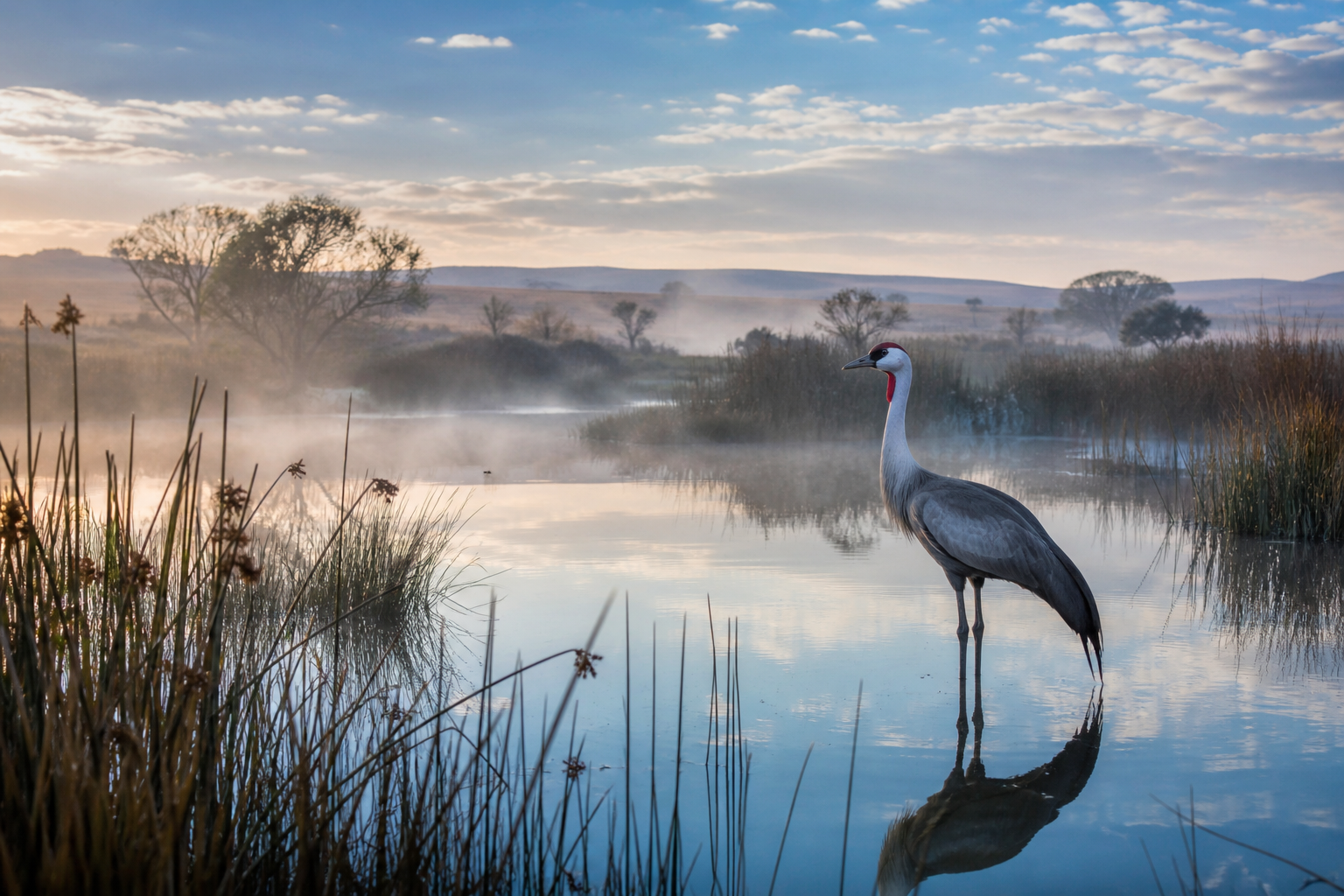
Dawn at the Wakkerstroom Wetland Reserve – arrive before the mist lifts
The reserve has self-guided walking trails that wind through the wetlands and grasslands at the edge of town. In winter, the vegetation is low and the birds are everywhere – in the reed beds, on the dam, in the sky above you. You do not need to be a serious birder to feel the magic of standing in the middle of a Wattled Crane’s territory while the sun comes up.
Cost: Free (self-guided). Nominal entry donation box at the trailhead.
2. Guided Birding Walk with a BirdLife SA Guide
If you want to understand what you are looking at – the local BirdLife SA guides know this landscape the way you know your own kitchen. A two-hour walk with one of them will leave you with a list, a story, and a completely new understanding of what South Africa’s grasslands actually contain.
Cost: R200–R350/person | Booking via Wakkerstroom Tourism or locally on arrival
3. Photograph the Grasslands at Golden Hour
Wakkerstroom’s grasslands in winter catch the late afternoon light in a way that is genuinely difficult to describe. The dry grass goes from amber to copper to something close to fire, and if there are cranes in the air, you have a photograph that most wildlife photographers spend years trying to find. You do not need an expensive camera. You need to be here at 4:30pm.
Cost: Free | Best light: 60–90 minutes before sunset
4. Visit the Wakkerstroom Museum
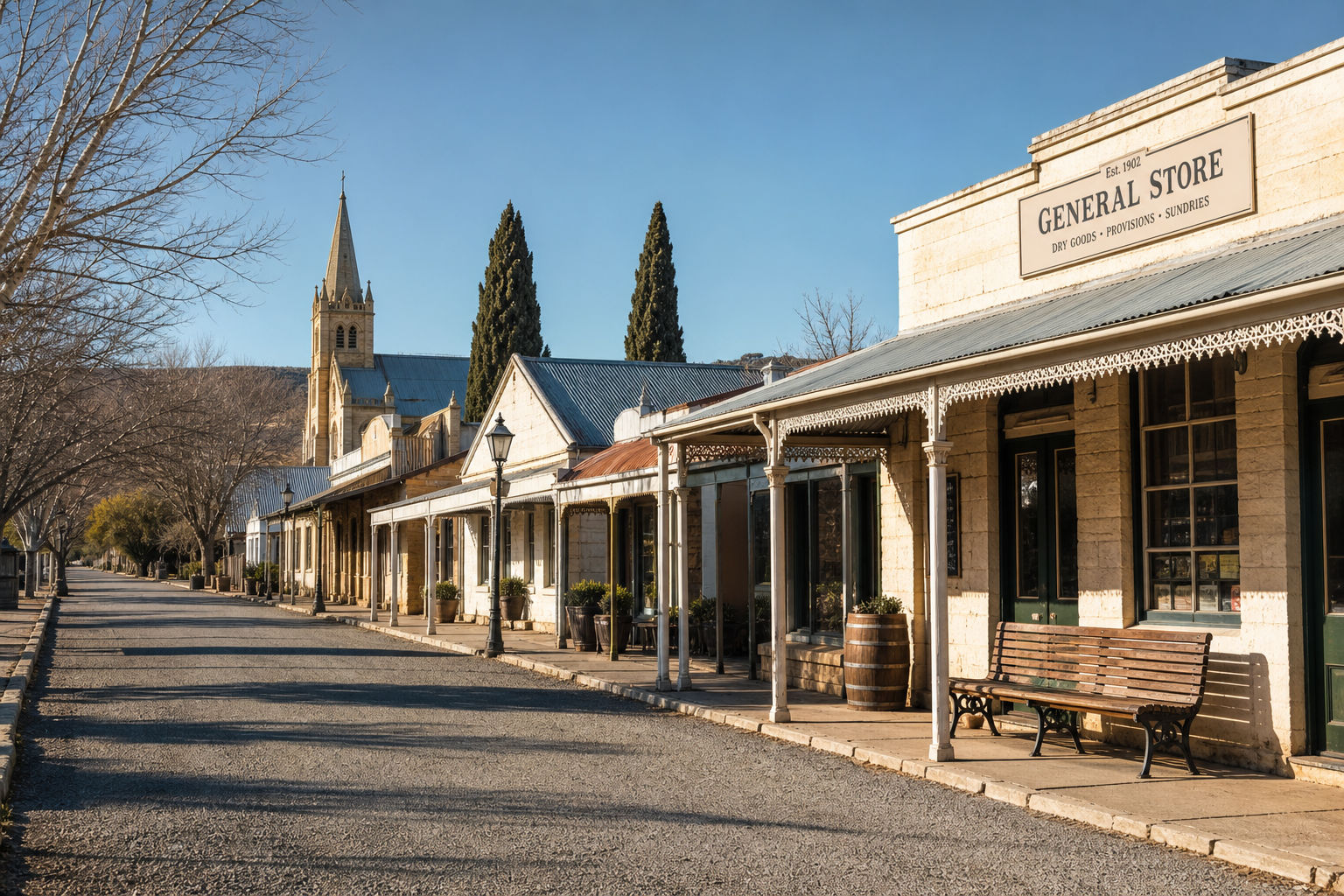
Wakkerstroom’s main street – built to last, not to impress
The town’s small museum chronicles local history from Voortrekker settlement through the Anglo-Boer War – this area saw significant activity during the war, and the museum holds artefacts and photographs that put the landscape into immediate human context.
Cost: R30/adult, R15/child
5. Drive the Grootgeluk Grassland Route
A circular gravel route of about 45km that loops through the surrounding farms and reserves, passing through some of the most intact highland grassland left in South Africa. You will likely see Southern Ground Hornbills, Common Cranes, and – in the warmer months – Blue Cranes in flocks that are increasingly rare elsewhere.
Cost: Free | Best done in your own vehicle with a picnic
6. Settle into the Village Pub & Guesthouse
This is not a tip for nightlife. The Village Pub is where the farmers come on a Friday afternoon, where the birders compare lists over lamb curry, and where you will have a conversation with a stranger that you remember for years. Order the soup. Order whatever they say is good. Sit for longer than you planned.
Cost: Mains from R80–R150
The Budget Breakdown
| Budget Tier | Mid-Range Tier | |
|---|---|---|
| Accommodation | Camping (Phumula Lodge campsite or nearby farms): R100–R180/night | Guesthouse (Village Pub & Guesthouse, Liz at Lancaster): R550–R800/night |
| Meals | Self-catering (stock up in Volksrust, 45min away): R80–R130/day | Eating out (local eateries, Village Pub): R150–R280/day |
| Activities | Self-guided wetland walk, grassland drive: Free–R30 | Guided birding walk + museum: R250–R400/day |
| Fuel | From Johannesburg: ±R700 return | From Durban: ±R600 return |
| Estimated daily total | R300–R400/day | R950–R1,450/day |
Practical Information
Nearest town: Volksrust (45km, ±30 minutes) – stock up on fuel and groceries before arriving. Wakkerstroom has limited shops.
Getting there: From Johannesburg, take the N17 east toward Ermelo, then the R543 south toward Wakkerstroom. Tarred road all the way. GPS works fine.
From Durban: N11 north through Newcastle, then the R543. A 3-hour drive through the KZN/Mpumalanga highlands – beautiful in its own right.
Best time to visit: Year-round, but winter (May–August) offers the best birding – vegetation is low, birds are visible, and the cold mornings have a drama all their own. Spring (September–October) is spectacular when the wildflowers emerge.
What to pack:
– Warm layers – mornings can drop to near-zero in winter, even if midday is pleasant
– Binoculars (a pair in the R500–R800 range is more than enough)
– A field guide – Roberts’ Birds of Southern Africa if you are serious, Birds of Southern Africa (Sinclair et al.) if you want something lighter
– Comfortable walking shoes – the trails are easy but the ground is uneven
– Cash – some local operators and the museum do not have card machines
Before You Drive Away
Here is what I want you to know about Wakkerstroom: it will not try to sell itself to you. There are no signs on the highway. There is no glossy tourism campaign. Nobody is going to put it on a billboard in Sandton.
What it offers instead is something harder to find and far more valuable – the feeling of having genuinely discovered a place. Of being somewhere that exists on its own terms, for its own reasons, and that lets you in quietly, without fanfare, without a reservation form, and without a price tag on the experience.
The cranes will be there whether you come or not. They always have been.
But you should come.


