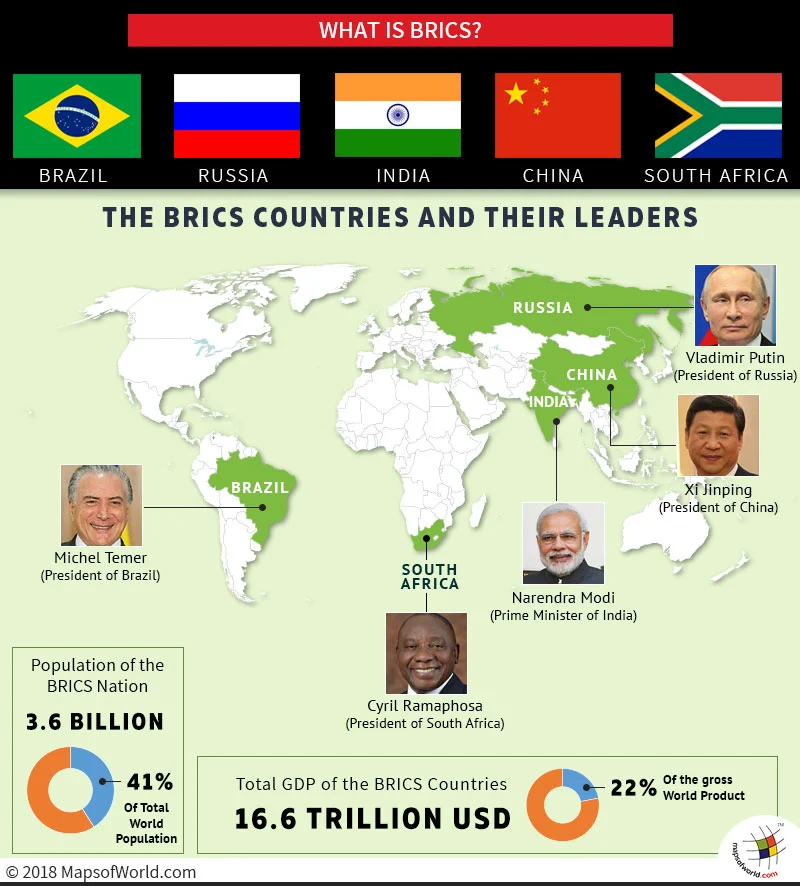
The BRICS countries (Brazil, Russia, India, China, and South Africa) have been critical of the US dollar for some time.
03 June 2023
Published By Everything ZA Travel
They argue that the dollar is too dominant in the global financial system and that this gives the United States too much power.
In 2014, the BRICS countries created a new reserve currency called the Contingent Reserve Arrangement (CRA). The CRA is designed to provide financial assistance to BRICS countries in the event of a financial crisis. It is not a full-fledged currency, but it is seen as a step towards reducing the dominance of the dollar.
In 2022, the BRICS countries have been even more critical of the US dollar. They have accused the United States of using economic sanctions as a weapon against Russia and other countries. They have also called for a new global financial system that is less reliant on the dollar.
It is unclear whether the BRICS countries will be able to create a new global financial system that is independent of the US dollar. However, their criticism of the dollar is a sign that they are not happy with the current status quo.
The G7 countries (Canada, France, Germany, Italy, Japan, the United Kingdom, and the United States) and the BRICS countries (Brazil, Russia, India, China, and South Africa) have had a number of disagreements in recent years.
One of the most significant disagreements has been over the war in Ukraine. The G7 countries have imposed a number of sanctions on Russia in response to the invasion, while the BRICS countries have refused to join in the sanctions. The BRICS countries have argued that the sanctions are counterproductive and that they will only hurt the global economy.
Another area of disagreement has been over the issue of climate change. The G7 countries have pledged to reduce their greenhouse gas emissions, while the BRICS countries have been more reluctant to commit to ambitious targets. The BRICS countries have argued that they need to focus on economic development first and that they can address climate change later.
The G7 and BRICS countries have also disagreed over the issue of trade. The G7 countries have called for free trade and open markets, while the BRICS countries have argued that they need to protect their own industries from foreign competition.
The disagreements between the G7 and BRICS countries are likely to continue in the years to come. The two groups of countries have different economic systems, political ideologies, and security interests. It will be difficult for them to find common ground on many issues.
Whether or not BRICS will be successful is a matter of debate. Some experts believe that the group has the potential to be a major force in the global economy, while others believe that it is too divided and will ultimately fail.
There are a number of factors that could contribute to BRICS’ success. First, the group has a large and growing population. The combined population of the BRICS countries is over 3 billion people, which is more than half of the world’s population. This gives the group a significant market and a large pool of potential consumers.
Second, the BRICS countries have a number of natural resources. Brazil has large reserves of oil and iron ore, Russia has vast reserves of oil and natural gas, India has a large agricultural sector, China is a major producer of manufactured goods, and South Africa has significant mineral wealth. This gives the group the potential to be self-sufficient in many areas.
Third, the BRICS countries are all relatively young countries. This means that they have a young and growing workforce, which is essential for economic growth.
However, there are also a number of factors that could contribute to BRICS’ failure. First, the group is divided politically. Brazil, India, and South Africa are all democracies, while Russia and China are authoritarian states. This could make it difficult for the group to agree on common goals and policies.
Second, the BRICS countries have different economic systems. Brazil and South Africa have market economies, while Russia and China have centrally planned economies. This could make it difficult for the group to coordinate their economic policies.
Third, the BRICS countries are at different stages of development. Brazil and South Africa are considered to be emerging markets, while Russia and China are considered to be developed countries. This could make it difficult for the group to agree on common priorities.
Overall, it is too early to say whether or not BRICS will be successful. The group has the potential to be a major force in the global economy, but it also faces a number of challenges. Only time will tell whether or not the group will be able to overcome these challenges and achieve its goals.